


Creating a Film Poem Portfolio
Just back from the Cork International Poetry Festival, organised by Munster Literature Centre where I read and screened poetry films together with poet and film poet Colm Scully. As always, when I see my films on the big screen, my heart is in my throat, but the excitement adds energy to voice my poems in the reading that follows.
As I am judging the Drumshanbo Written Word Poetry Film Competition, and have watched about fifty film poems so far, I thought it would be interesting to give some advice about how to create a successful portfolio of film poems. Sure, I will be judged myself on this too: I am preparing for an exhibition of film poems and installations at Down Arts Centre to open on 2nd July.
Creating a film poem involves a poem, so we start with the text. This, combined with visual storytelling, creates a unique artistic experience. The goal is to present work that resonates emotionally and intellectually with viewers. I like to be surprised, and this can be achieved by reversals, visual jokes, a story told with images in the background, or text responding to images and vice versa.
Understanding Film Poetry and Portfolios
Film poetry blends cinematic techniques with poetic language and rhythm. It is not just about reciting a poem on film, or illustrating it with footage but about evoking feelings and ideas through moving image, sound, and words. A portfolio in this context is a collection of works that showcases the artist’s style, themes, and technical skills. It serves as a professional tool to communicate the artist’s voice and vision.
My film poem, Belfast Exposed, made in 2019, which I screened in Cork, used the same poem, recited by many different accents, and this was the precursor of many multi-lingual film poems that, to some extent, became my style.
To build a strong film poetry portfolio, one must focus on several key elements:
Conceptual clarity: Each piece should have a clear theme or message.
A "dialogue" between the moving image and the poetic narrative.
Technical proficiency: Good editing, sound design, and cinematography
Emotional impact: The work should engage the audience on a deeper level.

Planning and Selecting Content
Start by defining the purpose of the portfolio. Is it to attract collaborators, apply for grants, or simply share work with a wider audience? This purpose will guide the selection of pieces and the overall presentation.
When selecting content, consider the following:
Diversity of work: Include a range of styles and themes to show versatility.
Quality over quantity: Choose only the strongest pieces that represent your best work.
Narrative flow: Arrange the works in a way that creates a natural progression or dialogue.
Relevance: Ensure each piece aligns with the overall vision and message.
Crafting the Visual and Poetic Elements
The strength of film poetry lies in the seamless integration of visual and poetic elements. Each frame should complement the words, and the words should enhance the imagery. The image may be stronger than the words, and you can edit the text. This balance requires careful scripting, storyboarding, and editing. But more often than not, in my practice, all is decided in the editing suite. You can use found footage or shoot according to the storyboard. In my practice, more often than not, "accidents" can happen or on-the-spot decisions that create an organic feeling during creation as well as in the finished product.
Some practical tips include:
Use symbolism and metaphor in both visuals and text to add layers of meaning.
Pay attention to rhythm and pace in editing to mirror the poem’s flow.
Experiment with lighting and colour to evoke specific moods.
Incorporate soundscapes or music that support the emotional tone.
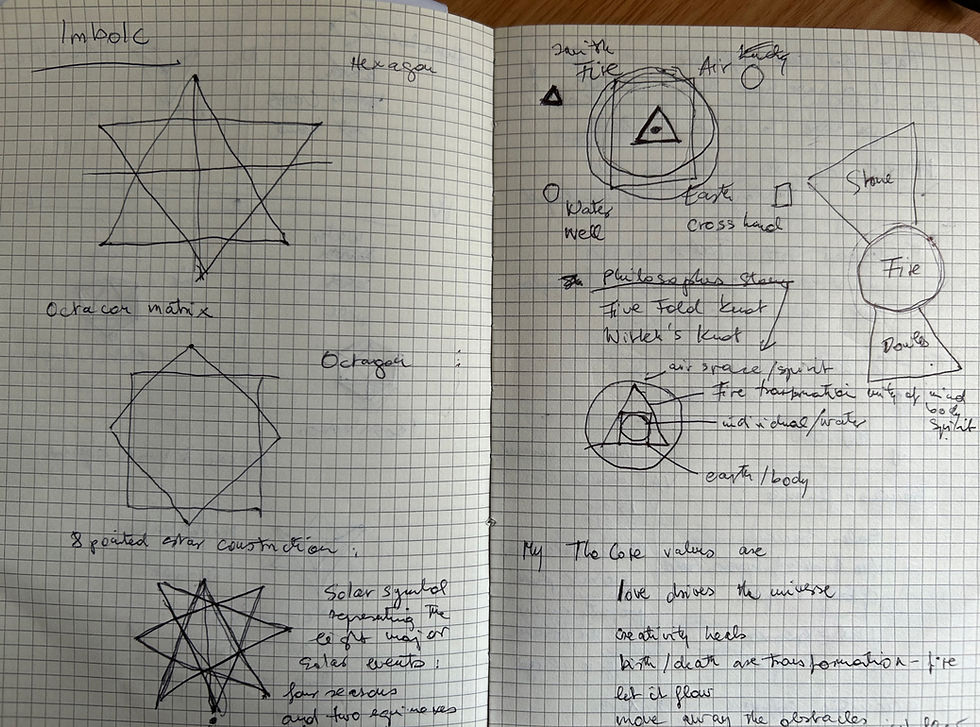
Sometimes a clear visual concept is required, something that might add to the film poem or not, but most certainly, it gives you a frame of thought that you can always return to. Doodling is positively encouraged!
Suggested reading: Metaphor and Film by Trevor Whittock (Cambridge University Press, 1990)
The goal is to create a sensory experience that invites reflection and interpretation. Below: designing a film poem with the title IMBOLC - to be unveiled at Down Arts Centre.
Presenting the Portfolio Effectively
Presentation is as important as the content itself. A well-organised portfolio makes it easier for viewers to engage with the work and understand the artist’s vision. Consider the following when presenting a film poetry portfolio:
Provide contextual information such as titles, dates, and brief descriptions, screenings and prizes
Include a biography or artist statement to give insight into your background and approach.
Make the portfolio accessible on multiple platforms, including websites and social media.
Ensure technical compatibility for smooth playback of video and audio files.
Developing a Personal Artistic Voice
A distinctive voice sets a portfolio apart. It reflects the artist’s unique perspective and cultural influences. Developing this voice requires ongoing experimentation and self-reflection.
To cultivate a personal style:
Draw inspiration from diverse cultural narratives and artistic traditions.
Ask yourself "deep" questions - such as why am I doing this?
What makes me angry? What would I like to change?
Reflect on personal experiences and values to inform your themes.
Be consistent in your use of motifs, tone, and visual style.
Seek feedback from peers and mentors to refine your work.
Stay open to growth and change while maintaining core elements of your vision.
So, I cannot deny that some of the film poems entered in the Drumshanbo Poetry Film competition inspired me and encouraged further play and experimentation.
Suggested reading: Creative Film Making from the Inside Out by Jed Dannenbaum, Carroll Hodge, Doe Mayer (Fireside, 2003, NY)
Expanding Reach and Impact
Sharing a film poetry portfolio with a wider audience is essential for growth and recognition. Strategies to expand reach include:
Participating in film festivals and poetry events.
Collaborating with other artists and cultural organisations.
Engaging with online communities and forums related to film and poetry.
Submitting work to publications and platforms that focus on experimental and cross-disciplinary
Suggested reading: The Poetics of Poetry Film by Sarah Tremlett (Intellect, 2021, Bristol)
These efforts contribute to building a network and establishing a presence in the contemporary arts scene. If you are lucky and can be bothered with writing applications, you will get funding and commissions. But still, you will make the film poem, no matter what, driven by your passion.
See you in Drumshanbo on 21st August, when we will screen the shortlisted films and give the generous award.


Comments